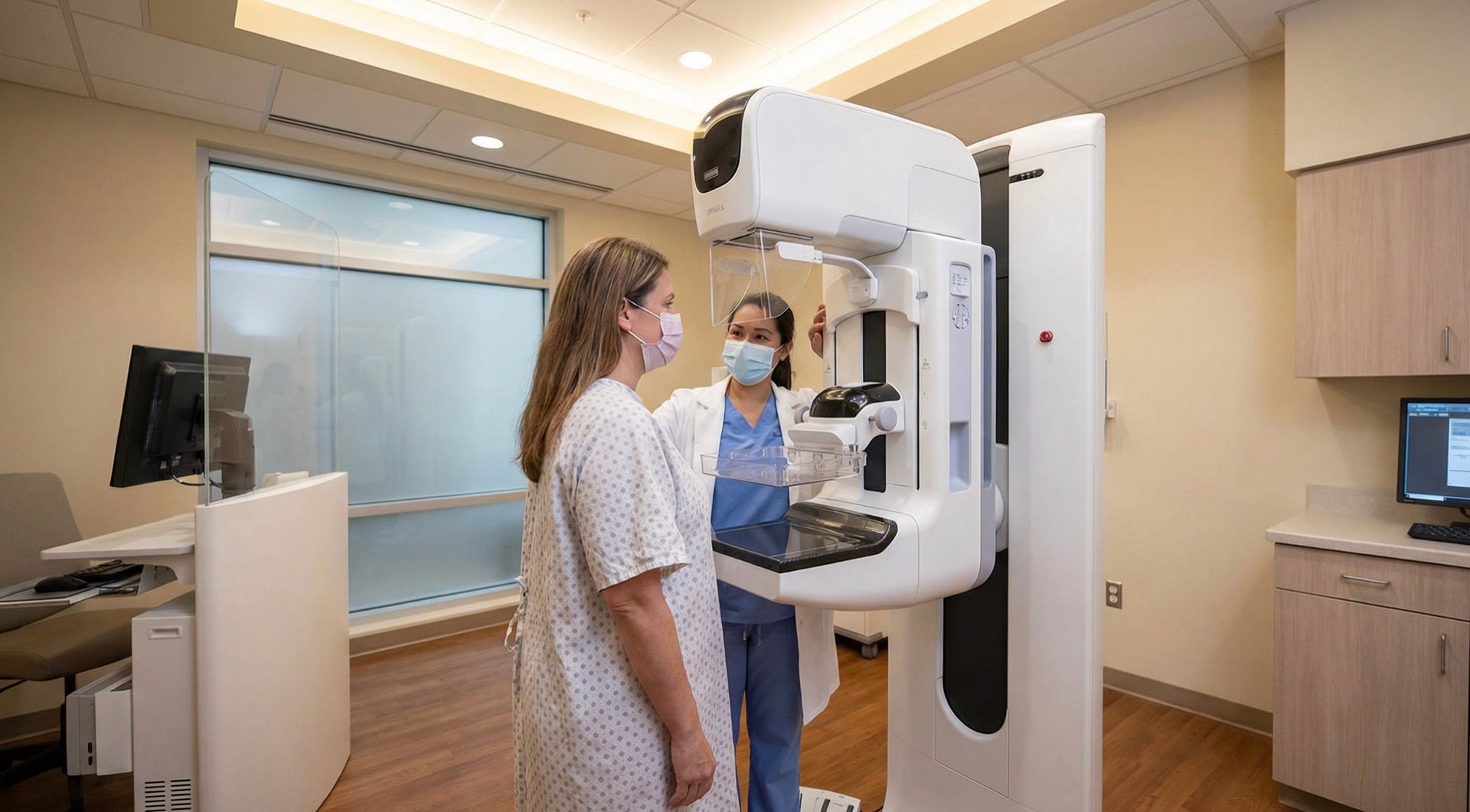
Women's Imaging
Dedicated breast imaging and women's health services — from walk-in screening mammograms to advanced breast MRI.
Walk-In Screening Mammograms · Monday–Friday, 1:00–4:00 PM · No appointment needed.
Early Detection Saves Lives
Compassionate Care for Every Woman
At The Radiology Clinic, women's imaging is one of our most important services. We understand that a mammogram can feel stressful — our caring staff takes time to make the experience as comfortable and reassuring as possible.
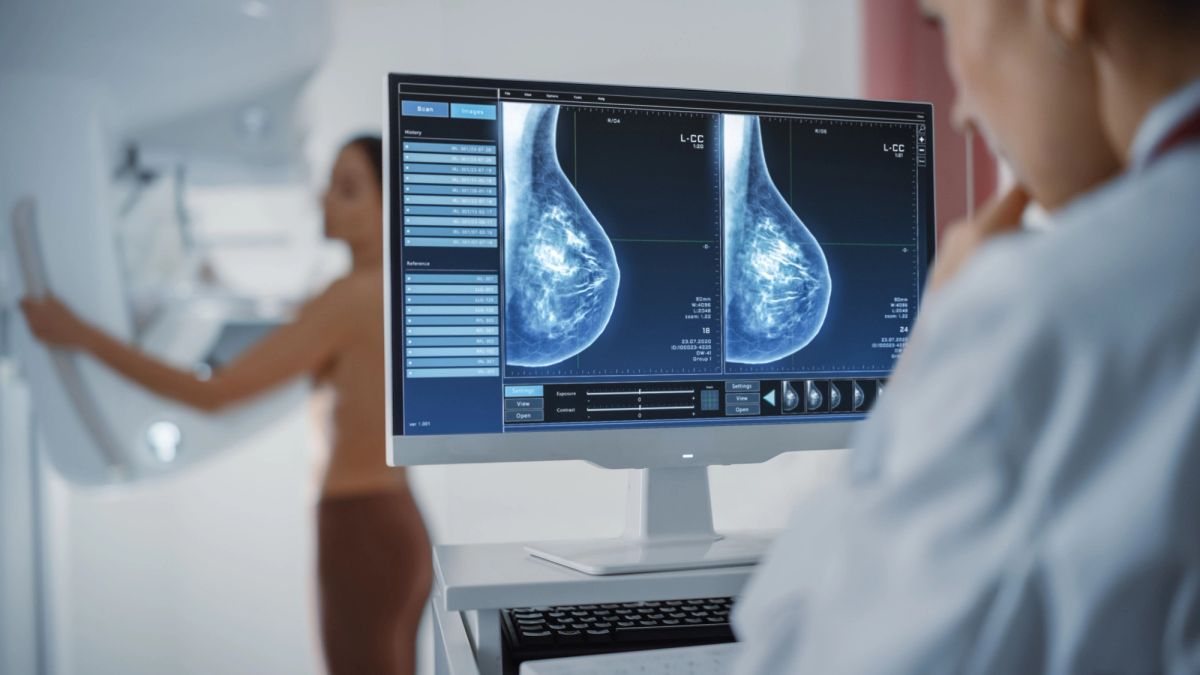
We use 3D digital mammography (tomosynthesis) — the most advanced screening technology available — giving our radiologists a clearer, layer-by-layer view of breast tissue. This means fewer callbacks, earlier detection, and greater peace of mind.
Our Women's Imaging Services
Screening Mammography
Walk-In AvailableAnnual screening mammograms are recommended for women 40 and older. Our 3D digital mammography (tomosynthesis) provides clearer, more accurate images — finding cancers earlier and reducing false positives.
- Walk-in screening available Monday–Friday, 1:00–4:00 PM
- No appointment needed for screening mammograms
- 3D tomosynthesis technology for superior accuracy
- Results mailed to you and sent to your physician within 2–3 days
Diagnostic Mammography
Appointment RequiredDiagnostic mammography is used when a screening mammogram shows a potential concern, or when you have symptoms such as a lump, pain, skin changes, or nipple discharge. Our radiologists provide same-day reads for diagnostic studies when possible.
- Indicated for follow-up of screening abnormalities
- Used for patients with breast symptoms or implants
- Additional views and spot compression available
- Subspecialty breast imaging radiologist review
Breast MRI
By ReferralBreast MRI uses magnetic resonance imaging — no radiation — to provide highly detailed images of breast tissue. It is used for high-risk screening, surgical planning, and evaluating the extent of disease in newly diagnosed patients.
- Recommended for women at high genetic or familial risk
- Used for staging prior to breast surgery
- Detects cancers missed by mammography in dense breasts
- Requires physician referral and insurance pre-authorization
How to Prepare for Your Mammogram
A few simple steps ensure the best possible images and experience.
Schedule your mammogram during the week after your menstrual period — when breasts are less tender.
Do NOT wear deodorant, antiperspirant, powder, or lotion under your arms or on your breasts on the day of your exam.
Bring your prior mammogram films or records if they were done at another facility.
Wear a two-piece outfit so you only need to remove your top.
Inform the technologist if you have breast implants or have had prior breast surgery.
Advanced Screening
Breast MRI Screening
For women at elevated risk for breast cancer, mammography alone may not be enough. Breast MRI provides a highly detailed view of breast tissue without radiation, often catching cancers that mammography can miss in dense tissue or high-risk patients.
Who benefits from Breast MRI screening?
- Women with a lifetime breast cancer risk of 20% or higher
- Women with a personal or strong family history of breast cancer
- Women with a known BRCA1/BRCA2 mutation or other high-risk genetic finding
- Women who have had chest radiation between ages 10 and 30
- Women with very dense breast tissue, when recommended by their physician
What to expect
Breast MRI takes approximately 30–45 minutes. You'll lie face-down on a padded table, and a contrast agent is typically given through an IV to help highlight any areas of concern. The exam is painless, uses no radiation, and our team will walk you through every step.
Personalized Screening
Lifetime Breast Cancer Risk Scoring
Knowing your personal risk is the first step in building a screening plan that's right for you. As part of every screening mammogram at The Radiology Clinic, we calculate your lifetime breast cancer risk using validated risk models (such as Tyrer-Cuzick).
What is a lifetime risk score?
A lifetime risk score estimates your chance of developing breast cancer over the next 10, 20, or 30 years based on factors like family history, reproductive history, breast density, and genetic markers.
Why it matters
If your score puts you at elevated risk, you and your physician can decide whether supplemental screening — like breast MRI, more frequent mammograms, or genetic counseling — would help catch cancer earlier.
Results are sent to you and your referring physician, and our team is happy to walk you through what your score means and what to do next.
Know Your Body
Breast Health Awareness
Mammography can show changes in the breast up to two years before they can be felt — but self-awareness still matters. If you notice any of the following, see your healthcare professional right away.
Symptoms to Watch For
- Breast lump or mass — painful or painless
- Lump or swelling under the arm or around the collarbone
- Skin irritation, dimpling, or swelling of all or part of the breast
- Breast or nipple pain, or a nipple turning inward
- Redness, scaliness, or thickening of nipple or breast skin
- Nipple discharge other than breast milk
Why Annual Mammograms Matter
The age at which women should begin annual mammograms.
Reduction in breast cancer deaths since mammography screening became widespread in 1990.
Breast cancers occur in women ages 40–49.
Women diagnosed with breast cancer have no family history of the disease.
Statistics provided by the American College of Radiology.
Breast Care Recommendation
Age 40 and over: Mammogram every year, or as directed by your healthcare professional. If you find a lump, notice any changes, or experience any of the symptoms above, see your healthcare professional immediately.
Why Choose The Radiology Clinic for Mammography?
Compassionate Care
Our technologists understand that this exam can feel anxiety-inducing. We take time to explain every step and make you feel at ease.
ACR Accredited
Our mammography program is fully accredited by the American College of Radiology — the highest standard in breast imaging quality.
Walk-In Convenience
No referral needed for screening mammograms. Walk in Monday–Friday from 1–4pm — no appointment required.
Schedule your annual mammogram or ask about advanced screening options.
Walk in Mon–Fri 1–4pm, or call to schedule a diagnostic mammogram, breast MRI, or to discuss your lifetime risk score.